Talk about plans & past experiences

Handle times and amounts, discuss a vacation and explain what happened. Learn to change verb endings and connect events in a short account.

Tell someone about a past trip.
سَافَرْتُ أَمْسِ.I travelled yesterday.
سَافَرْنَا أَمْسِ.We travelled yesterday.
The verb ending tells you who travelled. A time word places the event in the past.
A glimpse of what you’ll learn

What you’ll study.

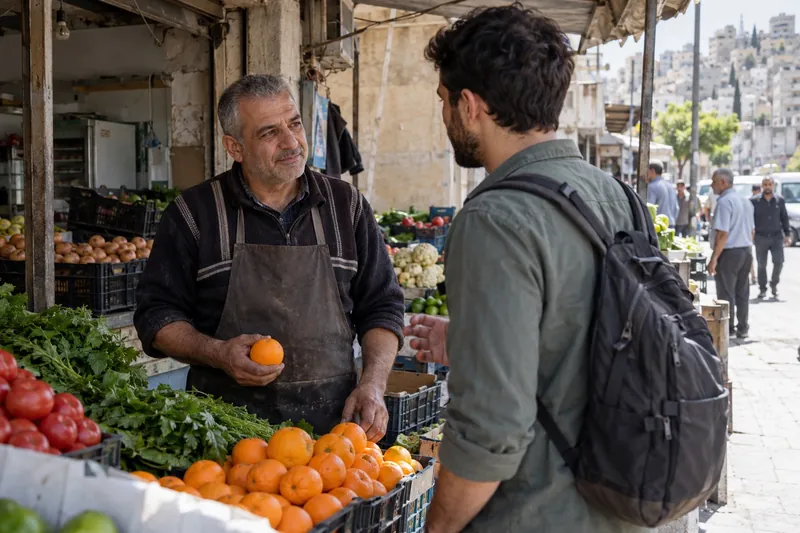
Illustrative scene of a visitor asking a seller about fresh produce

Understand times, prices and amounts

  • Ask and tell the time, including minutes past or to the hour, and discuss when an activity starts or ends.
  • Work with prices, currencies and amounts, using the number and counted-noun forms taught in the level.
  • Read practical tables such as prayer times and currency prices, and locate the information a question asks for.
  • Write times and amounts, and use schedule information to give clear answers about everyday arrangements.
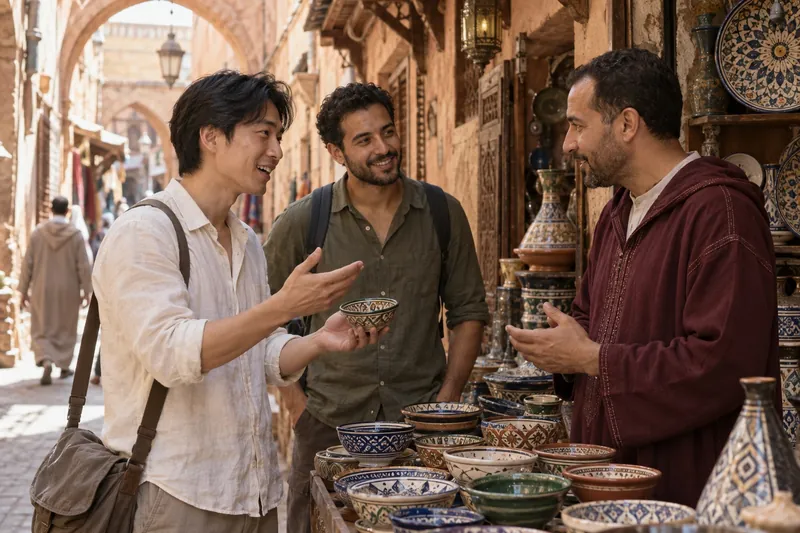
Illustrative scene of visitors talking with a seller in a traditional market

Describe a trip and what happened

  • Talk about vacation plans, decisions and reasons for travelling, then describe where you went and what you did.
  • Change past-tense endings for different people and add when, where and whether an event happened.
  • Read a vacation email and follow its destination, arrival, accommodation and sequence of visits.
  • Plan your own short vacation email with prompts, linking events and explaining the purpose of activities.
صَرْفٌ

Ṣarf · word forms

  • Change past-tense endings to show who completed an action.
  • Distinguish a completed action from a present-tense action in familiar verbs.
نَحْوٌ

Naḥw · sentence structure

  • Use time expressions and prepositions to locate an event and ask questions about it.
  • Combine numbers with nouns and use expressions of time and place.
  • Describe past situations with kāna and make past-tense negatives with mā.

By the end of ARB 104,
you should be able to…

Speaking

Discuss arrangements and recount a trip

Ask when an activity begins or ends and how much something costs. Explain a vacation plan or describe a past trip, choosing familiar past-tense forms and adding the time, place and reason for an activity.

Listening

Catch times, amounts and travel details

Identify the time or amount mentioned in a short exchange. Follow familiar vacation material and pick out the destination and main activities, distinguishing the details needed to answer the accompanying questions.

Reading

Find practical details and follow a travel account

Locate times and amounts in a table. Read a vacation email and identify where the writer is staying, what they have visited and what they plan to do, using time expressions to follow the sequence.

Writing

Write practical information and a vacation email

Write times and amounts clearly, then use a plan to compose a short vacation email. Include where and when events happened, link the activities in order, and use the past-tense and purpose expressions practised in the level.

Your starting point and next step.

Before this level

Make simple requests, express preferences, and understand short everyday dialogues.

Find your starting level

How your progress is reviewed

Your work across the level shows how well you can follow short dialogues, read familiar texts and write about everyday topics.

Your sessions and level reviews

Your learning materials

Reading materials, audio, interactive exercises, and vocabulary flashcards.

Wondering where to start with Arabic?

Talk through your goals, your starting level and how live classes could fit into your week.