I keep forgetting Arabic words. What should I do?
Practice recalling familiar words and return to them across the week.
Read article
Keep the original attempt, the correction and a new example together.
A correction is easier to revisit when you know what changed and why. Keep a small set of useful examples instead of copying every lesson into another notebook.
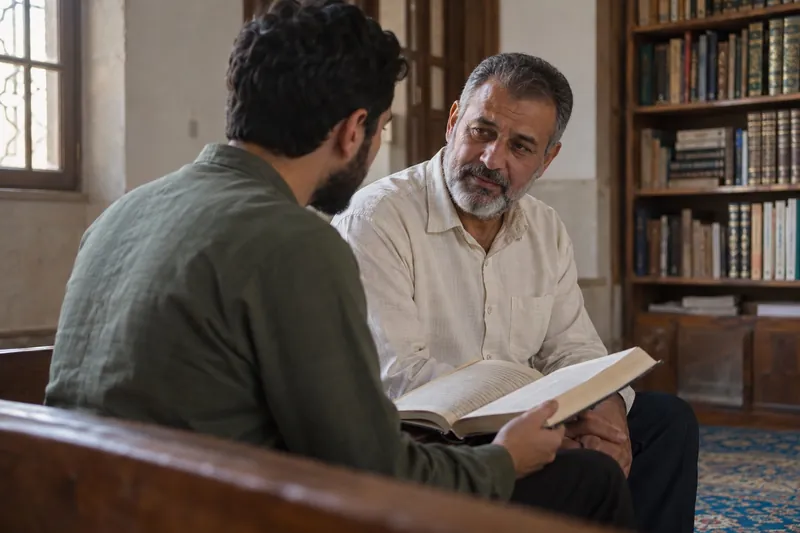
Write down the sentence you tried and the version your teacher helped you produce. For pronunciation, note the word or phrase and the sound that needs work.
Add a short explanation in words you understand. If you cannot explain the correction, ask for another example.
Try the corrected pattern with a different person, object, place or time. Ask your teacher to check the new example if you are unsure.
This shows whether you can apply the correction beyond the original sentence. Keep the task at your current level.
On another day, cover the corrected version and try the task again. Then check it. Use the form in a spoken answer or a new piece of writing.
Research on oral corrective feedback supports its value for language development. Use the log to keep that feedback ready for your next practice session.
Prioritize corrections your teacher highlights and errors that repeatedly affect your meaning. Move examples you can use comfortably out of the active list.
If a correction keeps returning, ask for more guided practice. Your log should make that question easier to explain.
Practice recalling familiar words and return to them across the week.
Read articleWork on one sound or phrase at a time, with a model and feedback you can use.
Read articleTurn familiar rules and vocabulary into answers you can produce in a conversation.
Read article