Read, write & introduce yourself

Connect the Arabic you read with words you can use. Build everyday vocabulary, ask simple questions and write your first introductions.

Ask a question. Give your own answer.
مَا اسْمُكَ؟What is your name?
اسْمِي أَحْمَدُ.My name is Ahmed.
Use a familiar question pattern, then change the name to make the answer your own.
A glimpse of what you’ll learn

What you’ll study.

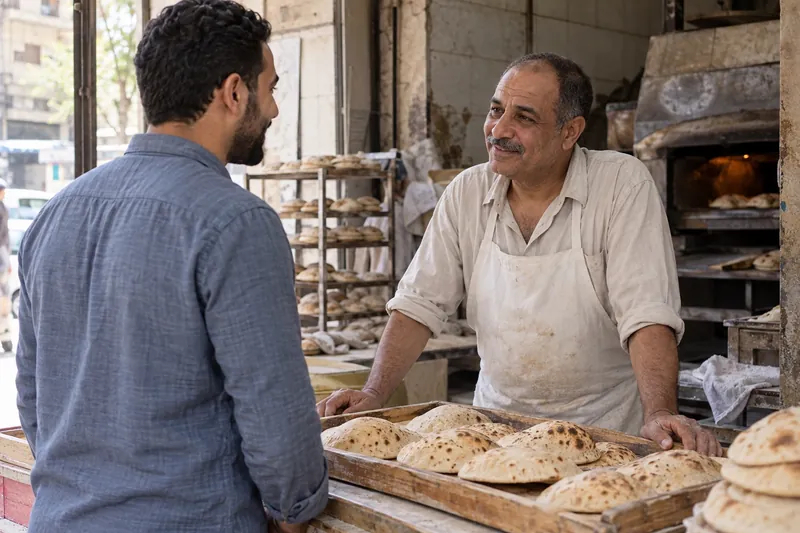
Illustrative scene of a visitor naming and asking about bread at a neighborhood bakery

Build an everyday vocabulary

  • Learn familiar words for people and occupations, and connect each word with a person or picture.
  • Build vocabulary for food, learning materials, rooms, furniture and clothing.
  • Recognize words for nature, animals and personal belongings in illustrated listening and reading practice.
  • Listen, repeat and match words to pictures before using them in the sentence patterns that follow.
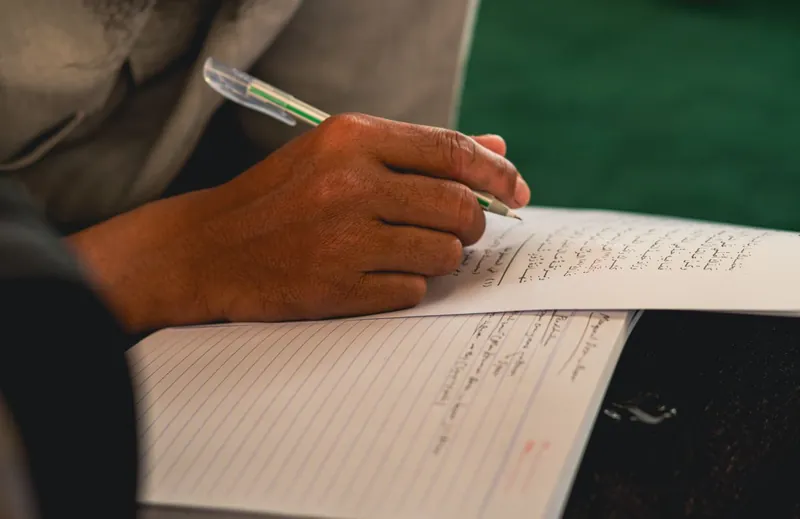
A hand writing Arabic in a notebook

Connect sounds with written words

  • Recognize letters on their own and at the beginning, middle and end of words; practise joining them in handwriting.
  • Connect short and long vowels with their sounds, and read words containing sukūn, shadda and tanwīn.
  • Learn how sun and moon letters affect pronunciation, and compare letters with similar sounds.
  • Move from reading individual letters and syllables to copying and reading familiar vowelled words.
Illustrative scene of a man listening and taking notes at his home desk

Turn words into simple sentences

  • Identify people and things with “this,” “I,” “you,” “he” and “she,” choosing masculine or feminine forms.
  • Ask who, what and where questions, give yes/no answers, and locate things using “here” and “there.”
  • Describe familiar objects with basic adjectives and colors, and join short ideas with “and.”
  • Read and use numbers to 100, days of the week, months and seasons alongside the sentence practice.
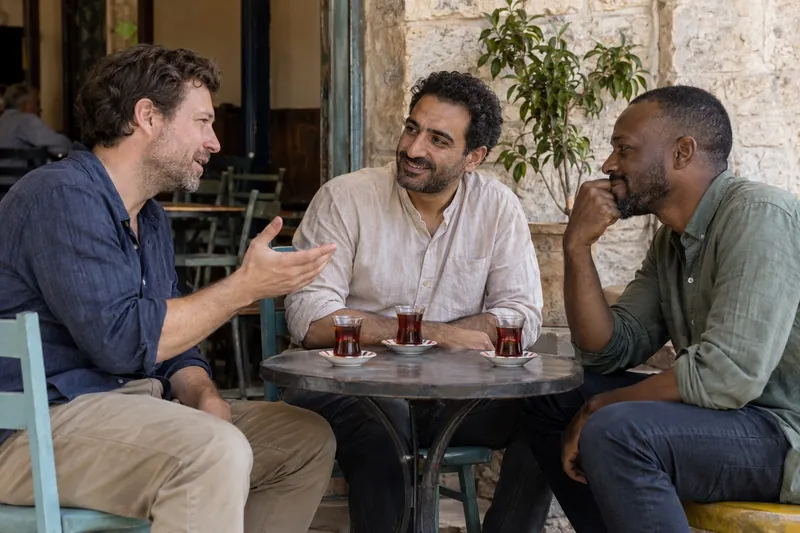
Illustrative scene of three men exchanging ideas over tea

Start a short conversation

  • Use greetings for meeting and leaving, and recognize the reply that belongs with each expression.
  • Welcome someone, ask how they are and give a short response.
  • Exchange names and countries, adjusting the question when speaking to a man or a woman.
  • Read, listen to and practise short model exchanges, then replace the details with your own.
صَرْفٌ

Ṣarf · word forms

  • Recognize masculine and feminine forms in familiar words. Formal word derivation develops later in the program.
نَحْوٌ

Naḥw · sentence structure

  • Use “this” for masculine and feminine nouns, basic pronouns and who, what and where questions in short sentences.
  • Give yes/no answers, describe familiar objects, and join simple ideas with “and.”

By the end of ARB 101,
you should be able to…

Speaking

Introduce yourself and respond

Greet someone, ask how they are, exchange names and countries, and close a short conversation. Adapt familiar model questions and answers to the person you are speaking to.

Listening & pronunciation

Connect the sounds you hear with words

Match familiar spoken words to pictures and recognize the questions in a short introduction. Practise similar sounds, short and long vowels, and doubled consonants so you can distinguish and repeat them.

Reading

Read familiar words and short exchanges

Recognize letters in their connected shapes and read vowelled words and simple sentences you have practised. Use vowel marks and sun/moon letter patterns when reading aloud.

Writing

Write joined letters and model sentences

Form Arabic letters from right to left and join them into familiar words. Copy short sentences and adapt simple models with your name, country or a familiar object.

Vocabulary

Name and describe everyday things

Name familiar people, occupations, food, clothing and belongings. Use basic adjectives, colors, numbers to 100 and calendar words in short, supported exchanges.

Sentence patterns

Ask questions and give simple information

Choose basic pronouns and masculine or feminine forms of “this.” Ask who, what and where, answer yes/no questions, and link two familiar ideas with “and.”

Your starting point and next step.

Before this level

New to reading Arabic? Begin with Reading 101 before ARB 101. Your placement assessment helps us decide which foundation skills you already have and where to begin.

Find your starting level

How your progress is reviewed

Your work across the level shows how well you can connect letters to sounds, read and write familiar words, and use them in conversation.

Your sessions and level reviews

Your learning materials

Reading materials, illustrated vocabulary, audio, interactive exercises, and flashcards.

Wondering where to start with Arabic?

Talk through your goals, your starting level and how live classes could fit into your week.