Tell stories & connect events

Move from short descriptions to organized accounts. Discuss sports, retell memories and use sequence, contrast and passive sentences to guide your listener or reader.

Report an event with a different focus.
سَجَّلَ اللَّاعِبُ هَدَفًا.The player scored a goal.
سُجِّلَ هَدَفٌ.A goal was scored.
An active sentence names the player. The passive reports what happened without saying who did it.
A glimpse of what you’ll learn

What you’ll study.

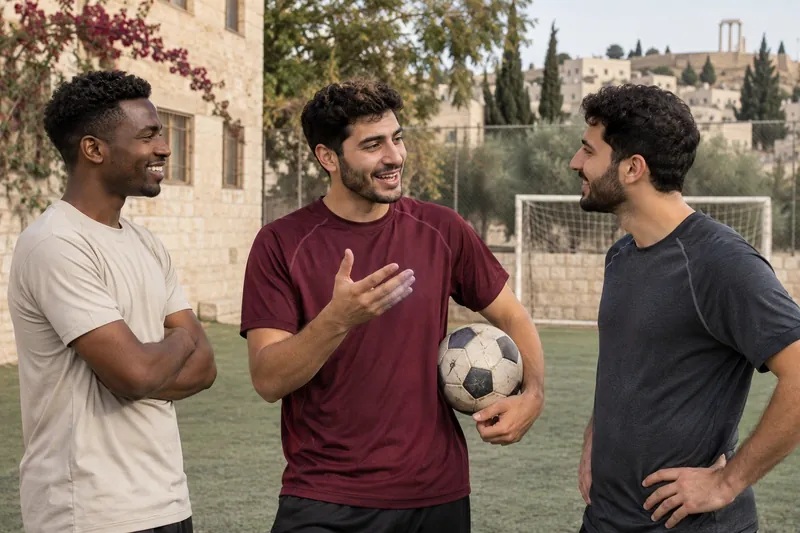
Illustrative scene of three men talking after a football game

Discuss interests and recount an event

  • Talk about the sports you practise or watch, explain your preference and discuss the benefits described in the material.
  • Describe a sport’s participants, basic rules and features, using questions to exchange information.
  • Identify the main point in spoken passages about sport and find specific information in a written description.
  • Plan linked paragraphs about a sport, its features and your own experience or reasons for choosing it.
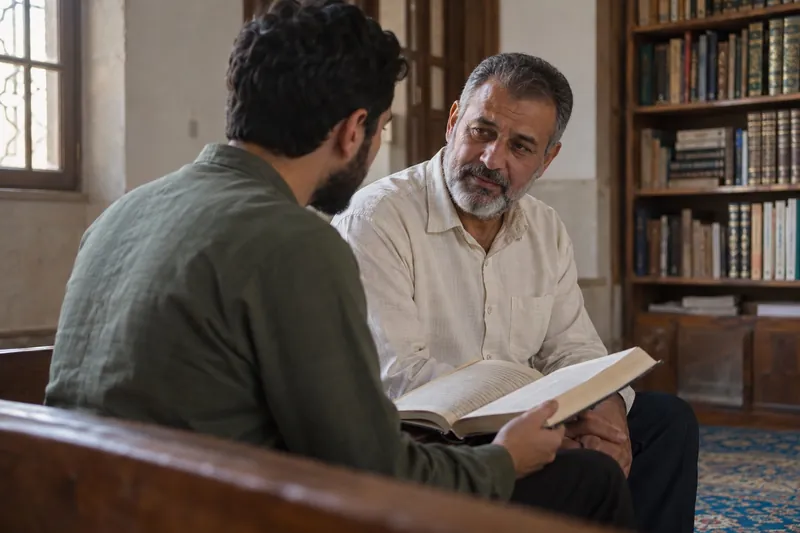
Illustrative scene of a younger and an older man discussing a book

Turn a memory into a connected account

  • Talk about childhood, school, family and familiar places, comparing what they were like with how they are now.
  • Read a personal memory and follow the events, reactions and lasting influence of someone in the writer’s life.
  • Use time and contrast links, descriptive clauses and passive forms to connect events and choose the focus of a sentence.
  • Plan a longer memory in paragraphs, add relevant descriptions and review the order and language before finishing.
صَرْفٌ

Ṣarf · word forms

  • Change familiar verbs from active to passive to focus on what happened.
  • Recognize common diptote noun patterns and the special ending rules they follow.
نَحْوٌ

Naḥw · sentence structure

  • Use object case markers and relative man and mā; review the negative forms studied so far.
  • Apply adjective agreement, iḍāfah endings and the case rules for diptotes.
  • Build exclamations and passive sentences, including the noun that takes the subject’s place.

By the end of ARB 109,
you should be able to…

Speaking

Explain an interest and recount a memory

Describe a sport, its main features and why you enjoy it. Recount a personal memory with people, places and events in order, comparing past and present and adding your reactions.

Listening

Identify main ideas and follow a sequence

Identify the main point and selected details in familiar passages about sport. Follow the order of information in a spoken account, using repeated listening to connect the events and people mentioned.

Reading

Follow explanations and personal memories

Find specific information in a description of a sport. Follow a longer personal memory, identify the writer’s reactions and explain how a person or experience influenced them, supporting your answer with details from the text.

Writing

Develop connected accounts in paragraphs

Plan paragraphs about a sport and a personal memory, giving each paragraph a clear focus. Connect events with time and contrast expressions, add relevant descriptions, and revise the sequence, sentence forms and spelling.

Your starting point and next step.

Before this level

Speak in connected sentences, give reasons, and follow questions about familiar experiences.

Find your starting level

How your progress is reviewed

Your work across the level shows how well you can follow a conversation, pick out details and organize your ideas in writing.

Your sessions and level reviews

Your learning materials

Reading materials, written practice, audio, interactive exercises, and vocabulary flashcards.

Wondering where to start with Arabic?

Talk through your goals, your starting level and how live classes could fit into your week.