Describe people & compare traditions

Describe appearance and character, discuss religious occasions and organize comparisons. Use roots and word patterns to understand related vocabulary.

Recognize a family of related words.
كَتَبَhe wrote
كَاتِبٌwriter
مَكْتَبَةٌlibrary
These words share the root letters kāf, tāʾ and bāʾ. Recognizing the root and pattern helps you connect vocabulary as you read.
A glimpse of what you’ll learn

What you’ll study.

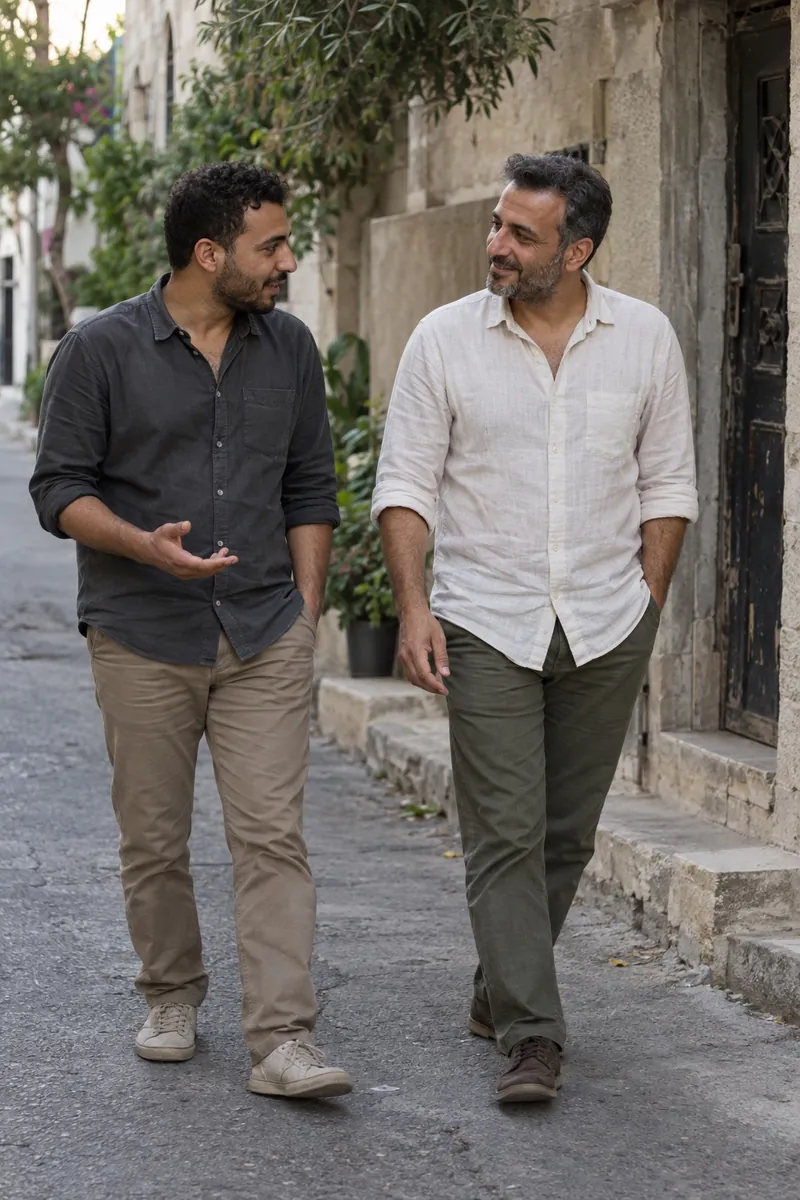
Illustrative scene of two men talking as they walk through their neighborhood

Describe someone beyond their name

  • Describe appearance, clothing and personality with enough detail for someone else to identify the person.
  • Compare people, or the same person at different ages, and ask focused questions to find out who is being described.
  • Read about family influence and discuss how details and examples support a description of character.
  • Gather observations for a written comparison, organize them around main ideas, and revise the connected paragraphs.
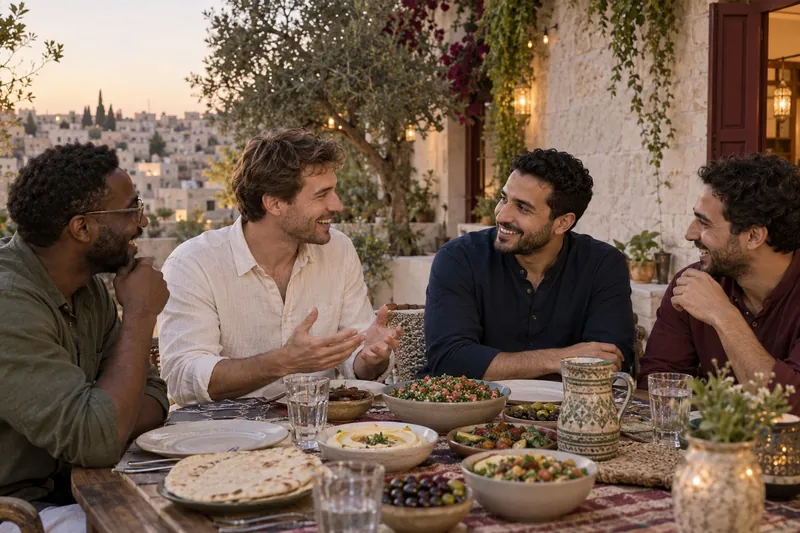
Illustrative scene of four men talking around a shared meal

Explain traditions and compare occasions

  • Discuss preparations, customs and activities associated with religious occasions and celebrations.
  • Explain what you intended to do, how plans changed and how people respond in these familiar situations.
  • Identify key details in news and reading material about occasions, and discuss similarities and differences in how they are observed.
  • Plan a comparison of two celebrations, covering preparations, activities and traditions, then check linking, grammar and punctuation.
صَرْفٌ

Ṣarf · word forms

  • Identify roots and related word families, and use the morphological scale (wazn) to compare word patterns.
  • Distinguish sound and weak verbs and recognize their main types before studying their changes in more depth.
نَحْوٌ

Naḥw · sentence structure

  • Review noun case markers and the special forms of the five nouns.
  • Study how subjunctive and jussive particles change present-tense endings and sentence meaning.

By the end of ARB 110,
you should be able to…

Speaking

Describe people and compare traditions

Describe someone’s appearance and character, ask questions to identify a person and explain similarities or changes. Discuss how an occasion is observed, including preparations, activities and your own preferences.

Listening

Identify a person and follow occasion details

Match spoken descriptions with the people they describe, using the distinguishing features you hear. Pick out the main details in listening material about religious occasions and use them to answer focused questions.

Reading

Understand descriptions and supporting details

Identify the main ideas in texts about character, family influence and religious traditions. Connect descriptive details and examples with the point being made, then refer to the text when explaining your response.

Writing

Plan and revise a clear comparison

Collect observations and organize paragraphs comparing two people or two celebrations. Use links for similarity, contrast and sequence, then review your ṣarf and naḥw, spelling and punctuation so the comparison is easy to follow.

Your starting point and next step.

Before this level

Narrate experiences, explain reactions, and understand connected spoken and written accounts.

Find your starting level

How your progress is reviewed

Your work across the level shows how well you can interpret a text, explain your view in discussion and develop an argument in writing.

Your sessions and level reviews

Your learning materials

Reading materials, audio and video, interactive exercises, and vocabulary flashcards.

Wondering where to start with Arabic?

Talk through your goals, your starting level and how live classes could fit into your week.