Retell events & explain an issue

Make an account clearer through sequence, detail and description. Work with humorous stories and environmental texts while developing longer writing and more complex verb forms.

Show how someone felt during an event.
عَادَ الطِّفْلُ ضَاحِكًا.The child returned laughing.
Ḥāl adds the child’s state at that moment. It helps you make a retold event more descriptive.
A glimpse of what you’ll learn

What you’ll study.

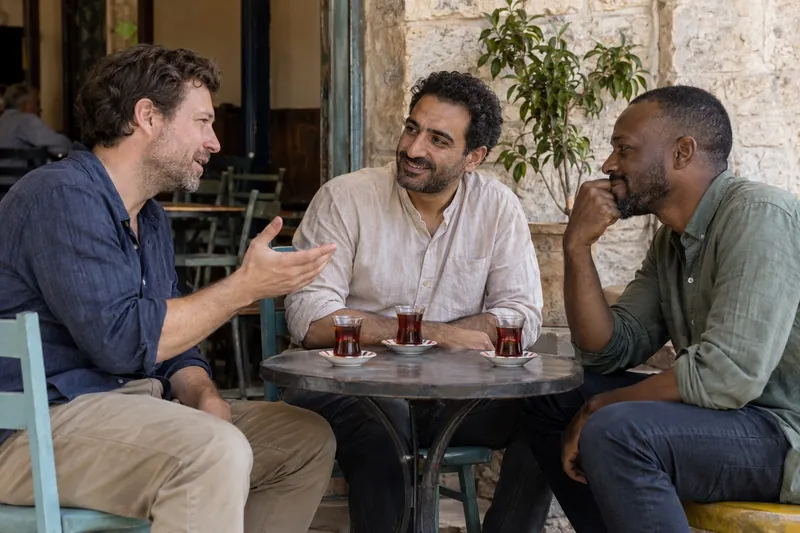
Illustrative scene of three men exchanging ideas over tea

Retell a story so the point is clear

  • Read and discuss humorous stories and cartoon dialogue, identifying the event or misunderstanding the account depends on.
  • Retell a familiar incident in your own words, keeping the characters, sequence and reactions clear.
  • Use time and cause-and-effect links to connect events before turning notes into a story.
  • Plan a true or amusing story with a setting, problem, events and ending, then revise the connected paragraphs.
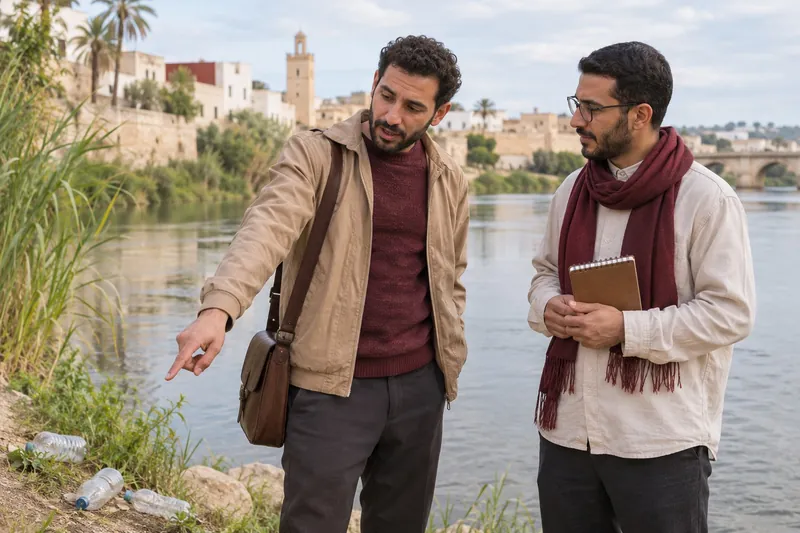
Illustrative scene of two men observing litter along a riverbank

Explain an issue using information

  • Discuss types of pollution, their effects and efforts to reduce them, using examples from the material and your surroundings.
  • Listen for dates, locations and human or material effects in reports about natural disasters; organize the details for comparison.
  • Read a poem about nature and work through its vocabulary and expressions with guidance.
  • Plan a factual report using gathered information, figures, sources and brief interviews, ending with the conclusions you reached.
صَرْفٌ

Ṣarf · word forms

  • Conjugate final-weak verbs with attached subject pronouns.
  • Practise the changes in doubled and hollow verbs rather than treating every verb as regular.
نَحْوٌ

Naḥw · sentence structure

  • Study the five present-tense forms in -āni, -ūna and -īna, including when the final n stays or drops.
  • Use the present-tense endings of verbs whose last root letter is weak.
  • Add ḥāl as a word, phrase or clause to describe someone’s state while an action happens.

By the end of ARB 111,
you should be able to…

Speaking

Retell an incident and explain a problem

Retell a humorous incident with its setting, sequence and characters’ reactions so the point is clear. Discuss an environmental problem, its visible effects and possible responses, using relevant examples and the language studied.

Listening

Follow events and organize factual details

Follow the events in a humorous account. In material about natural disasters, identify when and where events happened and distinguish human losses from material damage, organizing the information to answer questions or compare reports.

Reading

Explain a story and discuss a poem

Follow the events and meaning of a humorous story, using context to explain selected expressions. Read a nature poem with guidance, work through its vocabulary and discuss the ideas and images it presents.

Writing

Build a narrative and a sourced report

Plan and revise a multi-paragraph story with a problem, reactions and an ending. Develop a factual report on a nature or environmental topic, organizing information and sources, including brief interview views, and drawing the report together in a conclusion.

Your starting point and next step.

Before this level

Describe people and traditions in connected speech, and organize a written comparison with linking expressions.

Find your starting level

How your progress is reviewed

Your work across the level shows how well you can interpret a text, explain your view in discussion and develop an argument in writing.

Your sessions and level reviews

Your learning materials

Reading materials, audio and video, interactive exercises, and vocabulary flashcards.

Wondering where to start with Arabic?

Talk through your goals, your starting level and how live classes could fit into your week.