How long will it take me to learn Arabic?
Get an estimate based on your starting point, weekly commitment and the Arabic you want to use.
Read article
Compare what you can understand and do, and how much help you need.
Finishing a chapter tells you what you have covered. Progress also means being able to use that learning: understand a question, explain an idea or write something with less help.
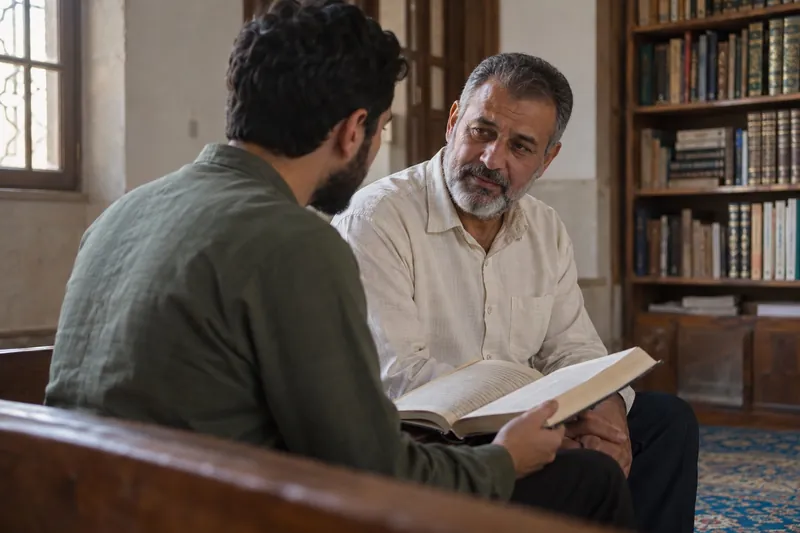
Choose a task from your current level, such as introducing your family or describing a past trip. Keep a short recording or writing sample, then try a similar task after further study.
Compare the attempts. Did you say more? Understand a follow-up question? Need fewer prompts? These are specific changes you can discuss with your teacher.
There is a difference between copying a model, adapting it and producing an answer independently. Each can be part of learning.
Record the help you used: a full script, a vocabulary list, a few prompts or an occasional correction. Use that information alongside accuracy and meaning.
You may understand a text before you can discuss it comfortably. You may explain an idea aloud but need help spelling it. One difficult skill does not describe all your Arabic.
Keep one example each of listening, speaking, reading and writing. Ask your teacher which skill needs the most attention next.
Hiwar’s academic team considers your work across the whole level, along with your teacher’s feedback. You move on when that overall picture shows you meet the standard for the next level.
Compare that feedback with the level outcomes. These describe the intended learning; completing a page or a number of payments is not the same as demonstrating readiness.
Get an estimate based on your starting point, weekly commitment and the Arabic you want to use.
Read articlePractice recalling familiar words and return to them across the week.
Read articleKeep the original attempt, the correction and a new example together.
Read the guide