
Should I learn Modern Standard Arabic or a dialect?
Compare Modern Standard Arabic (Fuṣḥā) and regional dialects for reading, understanding the Qurʾān, travel and everyday conversation.
Read article
A checklist for comparing the teaching, curriculum, workload and total cost.
Before choosing a program, find out what you will study, how you will practice and what support you will receive. Use the same questions for each option so the comparison is useful.
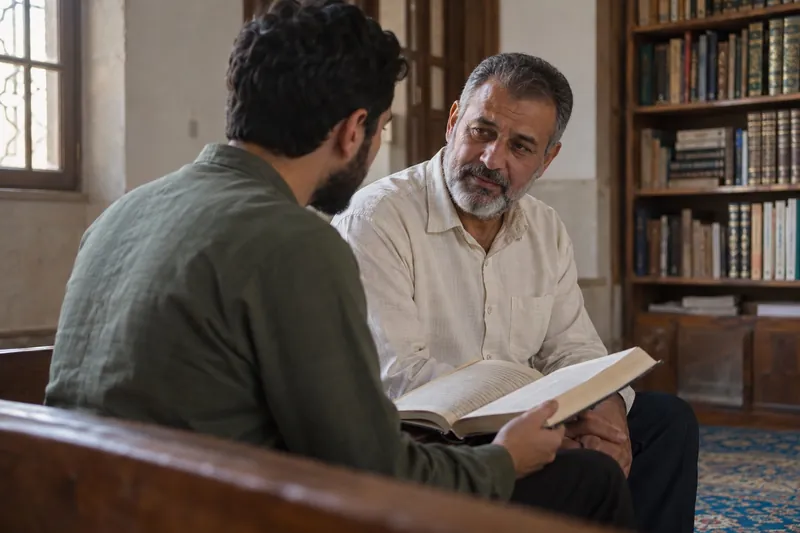
Ask whether the program teaches Fuṣḥā or a dialect. Look for specific topics, grammar and reading and writing tasks, as well as speaking opportunities.
Hiwar’s program guide shows each level’s content. If your goal involves a particular country, specialist text or qualification, ask how the course relates to it.
Ask how many learners attend, what you do during the session and how your work is corrected. Find out what happens when you cannot understand a question.
Compare the cohort and 1:1 tracks on the experience you want, not only the number of hours.
A program should explain where you begin and how readiness for the next level is reviewed. Prior study should be considered alongside your current ability.
A written and oral assessment reviewed by an academic advisor informs your starting level. At Hiwar, you advance when your work across the level shows you’ve met its learning goals.
Confirm the regular timetable, expected homework, total tuition, payment dates and support included. Read refund, pause and withdrawal terms before paying.
The cost guide explains Hiwar’s offer. Keep a copy of your written plan so you can refer to what was agreed.
Compare Modern Standard Arabic (Fuṣḥā) and regional dialects for reading, understanding the Qurʾān, travel and everyday conversation.
Read articleCheck the complete offer, payment dates and refund and pause terms before enrolling.
Read articleGet an estimate based on your starting point, weekly commitment and the Arabic you want to use.
Read article