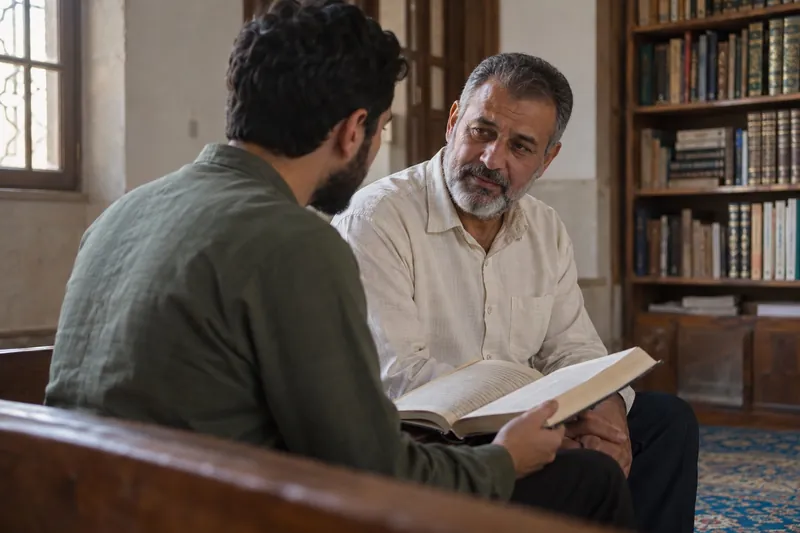
I can read Arabic aloud. Why don’t I understand it?
Find out whether vocabulary or sentence structure is stopping you from understanding what you read.
Read article
Compare Modern Standard Arabic (Fuṣḥā) and regional dialects for reading, understanding the Qurʾān, travel and everyday conversation.
Hiwar teaches Fuṣḥā, or Modern Standard Arabic. It is a strong fit for many reading and formal communication goals. If you want the everyday speech of one country, regional dialect practice may also be important.

Modern Standard Arabic is widely used in formal writing, education and media. Classical Arabic includes the language of the Qurʾān and older texts. Regional dialects are used in everyday conversation and vary by place.
The University of Chicago’s Arabic program overview explains these distinctions. Learning one variety helps you build knowledge, but does not make every other variety immediately familiar.
Vocabulary, sentence structure and word forms can help you recognize more meaning in what you read. Tell your advisor which texts or lessons you hope to understand.
A general Fuṣḥā course is not a qualification in tafsīr, tajwīd or Islamic scholarship. Those goals require their own focused study. If you can recite but struggle with meaning, start with this reading guide.
Name the country and the situations you expect to handle. Travel, housing, health, shopping and work appear in Hiwar’s curriculum. Local conversation may also involve dialect vocabulary and pronunciation.
If you need technical terminology, a professional exam or admission to a university, check the specific requirements alongside the general program.
Bring an example of the Arabic you want to use: a conversation with family, an article, a lecture or a work task. Discuss how the curriculum helps and what additional practice you may need.
Learners of all backgrounds are welcome. You do not need a religious reason to study Arabic.
Find out whether vocabulary or sentence structure is stopping you from understanding what you read.
Read articleUse a short recording to work out what you miss and practice hearing it in context.
Read articleA checklist for comparing the teaching, curriculum, workload and total cost.
Read the guide